A single missing stamp can delay a visa application by weeks — or get it rejected entirely. When governments, courts, and universities ask for a notarized translation, they mean a very specific thing, and submitting the wrong type of document is a costly mistake.
"Notarized translation" is one of those phrases that sounds complicated but is actually pretty straightforward once someone explains it clearly. Whether you need it for immigration, legal proceedings, or academic enrollment, understanding the process can save you real time and money.
This guide breaks down what a notarized translation is, when you need one, and how it is different from certified translation.
What is a Notarized Translation?
A notarized translation is a certified translation that has been signed in front of a notary public, who verifies the translator's identity and witnesses the signing.
Once the translator finishes the document, they write a signed statement confirming that the translation is accurate and complete. Then — and this is the part that makes it "notarized" — they sit down with a notary public and sign that statement in front of them.
A notary public is a government-authorized official whose job is to witness the signing and verify who you are. Importantly, they're not checking whether the translation is actually good. That part is still entirely on the translator. The notary just makes the whole thing official.
Which documents require notarized translation?
Notarization is typically necessary for official papers intended for use in foreign countries or for high-stakes legal and administrative procedures. While specific requirements depend on the receiving institution, the following types of records frequently require this level of authentication:
Vital Records and Identity Paperwork
Official documents concerning life milestones—such as certificates of birth, marriage, divorce, or death—are common candidates for notarization. It is also often required for identification items like passports, military service records, and driver's licenses.
Educational Credentials
When applying to schools or seeking employment abroad, individuals often must provide notarized versions of their academic achievements, including diplomas, university degrees, and high school grade reports.
Legal and Probate Instruments
Documents that carry significant legal weight, such as last wills and testaments, adoption records, and powers of attorney, generally require a notary's involvement. Court-related materials, including witness depositions, official rulings, and affidavits, are also frequently notarized to be recognized in legal proceedings.
Corporate and Financial Records
Businesses operating across borders often need notarized versions of their commercial contracts, company formation papers, and financial statements. This also extends to property deeds, tax returns, patent filings, and tender documentation used in international trade.
Immigration and Medical Documentation
While some immigration bodies accept standard certifications, certain visa or citizenship applications may demand notarized personal history records. Furthermore, medical reports or vaccination evidence might require this step when someone is seeking medical care in a different country or for specific immigration health clearances.
Because every government agency and educational body sets its own standards, you should confirm the exact needs of the recipient before beginning the translation process to avoid administrative delays.
What's the Difference Between a Translator and a Notary?
The translator is responsible for the actual words — their expertise, their accuracy, their professional judgment. The notary doesn't speak both languages and isn't evaluating the translation at all. They're simply there as an impartial witness to confirm you are who you say you are when you sign the document. That's why you'll typically need to bring a valid ID to the appointment.
One more thing worth knowing: in some international situations, notarization alone isn't enough. If the countries involved are part of the Hague Convention, you may also need something called an apostille — an additional government certification that essentially vouches for the notary's own credentials so the document is accepted abroad.
The honest truth is that every country and institution has its own rules, and they don't always match. Before you go through the whole process, check directly with whoever is receiving your documents. A quick confirmation call or email can save you from having to start over — and that's a headache nobody needs when deadlines are involved.
Notarized vs certified translations
While they sound similar, certified and notarized translations serve different legal functions. Choosing the wrong one can lead to administrative delays or rejected applications.
Certified Translations: Accuracy Verification
A certified translation is a professional translation accompanied by a signed statement of accuracy. The translator or agency formally declares that the converted text is a complete and faithful mirror of the original. This process focuses on the quality of the translation and holds the linguist accountable for any errors.
In the United States, this is the standard requirement for immigration documents submitted to USCIS, as well as many domestic court cases and university applications.
Notarized Translations: Identity Verification
A notarized translation adds a layer of formal witness to the certification process. The translator must sign their declaration in the physical presence of a notary public, who then verifies the translator's identity and applies an official seal.
Importantly, the notary does not check the translation's accuracy; their only role is to confirm that the person signing the document is who they claim to be. This service is typically necessary for:
- International use in foreign government offices.
- High-stakes legal papers like powers of attorney or property deeds.
- Specific academic records, such as foreign diplomas or high school transcripts.
Key Differences between notarized and certified translations
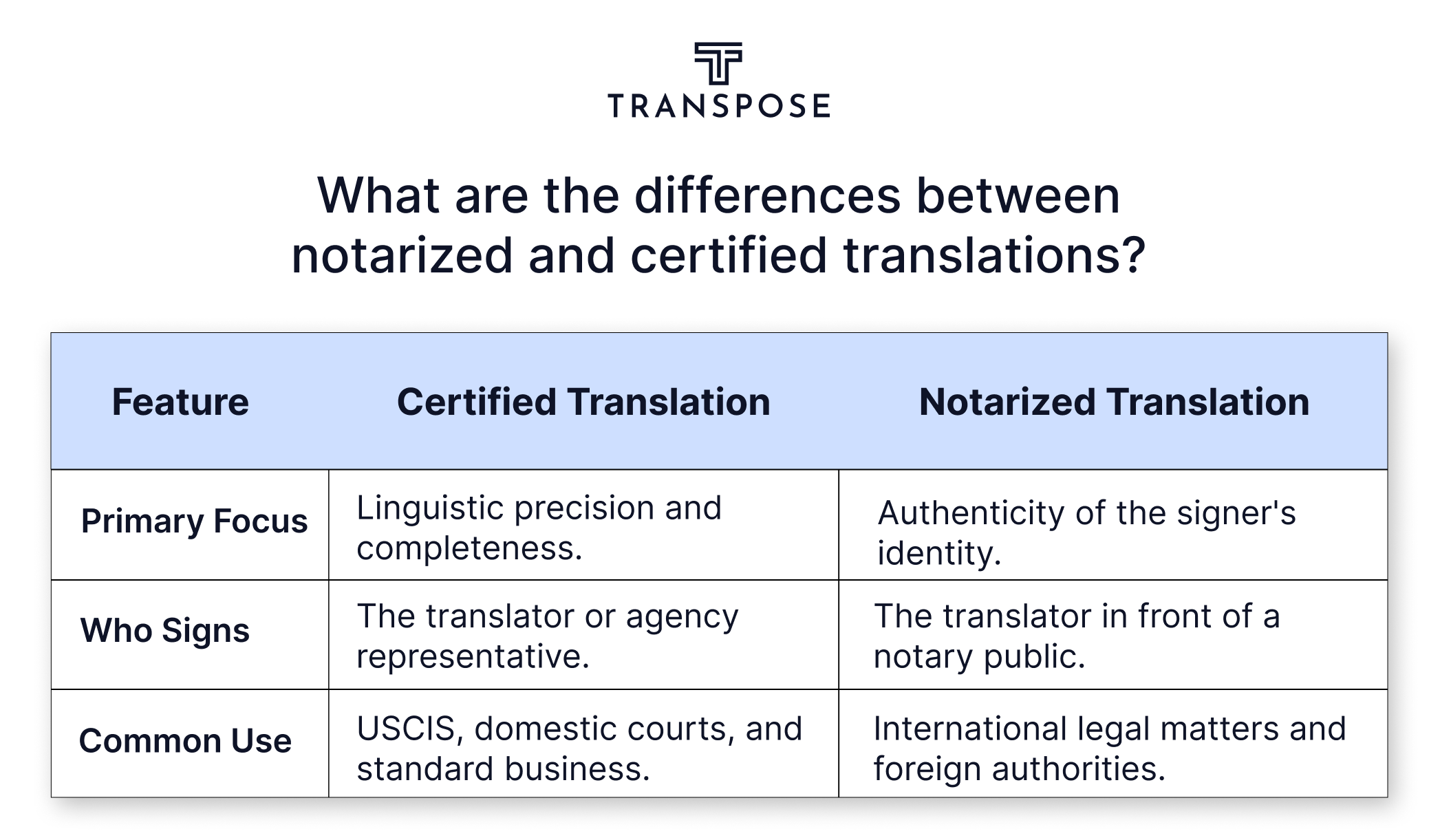
Because notarization involves a state official, it usually incurs higher costs and takes slightly longer than a simple certified translation. To ensure your paperwork is accepted, you should always confirm the specific requirements with the organization receiving your documents before starting the process.
Do you have documents that require professional translation? At Transpose, we provide accurate, certified translations that meet ISO 17100 and 18587 standards for legal, official, or regulatory use. For consultation or quote, email us at trp@transpose.ch or call +41 22 839 79 79 today.